Corporate governance compliance among listed companies rises to 92.9%
The Capital Market Development Authority’s 2025 review finds overall compliance with the Corporate Governance Code at 92.9%, up from 88% in 2024, though the improvement comes with caveats about comparability.
Listed companies in the Maldives scored 92.9% overall compliance with the Corporate Governance Code in the Capital Market Development Authority’s (CMDA) Corporate Governance Review 2025. That is up from 88% in 2024 and 86% in 2023, and the best result since the reviews began.
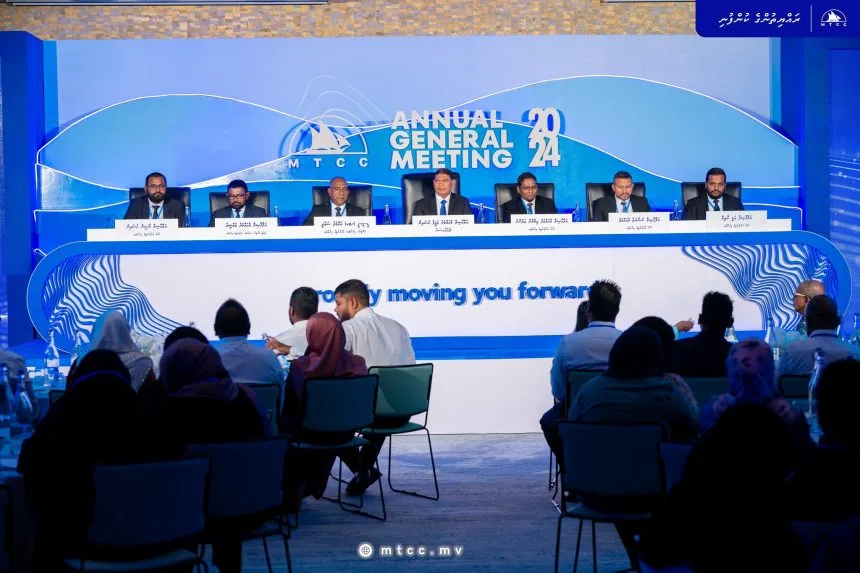
The review is in its fourth year and covers eight listed companies that published an annual report and audited financial statements for 2025 by 30 June 2026. Maldives Transport and Contracting Company (MTCC) and Centurion had not done so by that date and were excluded. The number of companies assessed has fallen from ten in 2023 and nine in 2024, which the CMDA says must be kept in mind when comparing results across years.
Company results
State Trading Organization (STO): 97.5%, the highest
Ooredoo Maldives: 96.2%
Bank of Maldives (BML): 94.9%
Amana Takaful: 93.7%
Housing Development Finance Corporation (HDFC): 91.2%
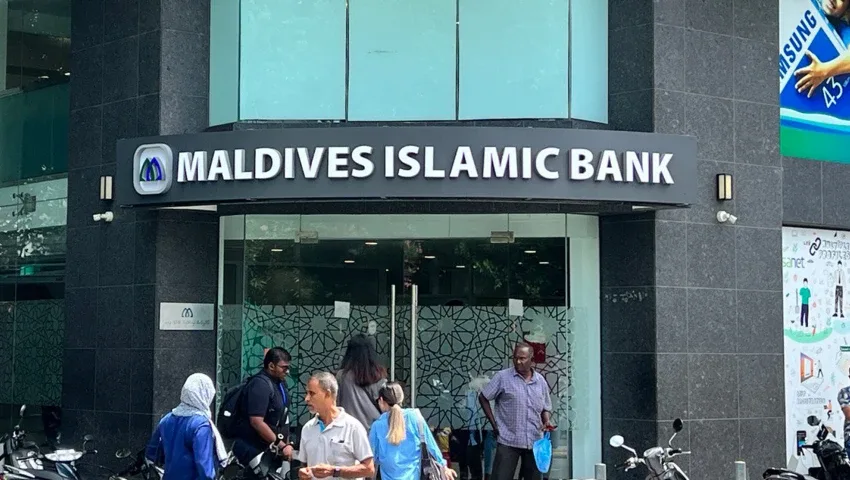
Maldives Islamic Bank (MIB): 91.1%
Dhiraagu: 89.9%
Maldives Tourism Development Corporation (MTDC): 88.6%, the lowest
Each company was assessed against 86 provisions, and 633 assessments were scored. Of these, 588 were compliant and 45 were recorded as findings. Four of the six scored sections of the Code, covering remuneration, shareholder rights, disclosure and the concerns framework, were fully compliant across every company. Of the 83 scored provisions, 65 were met by every company.
Gender diversity on boards, the weakest area in the 2023 and 2024 reviews, produced no findings this year. Remuneration reporting, flagged in both earlier reviews, is now fully compliant.
Where companies fell short
All 45 findings fall in two sections. Audit and Internal Control scored 86.8%, the weakest section, and accounts for 18 findings. Board Issues scored 91.1% and has the most findings overall because it is the largest section.
Six provisions account for 30 of the 45 findings:
Annual election of one third of the board: seven of eight companies were assessed as not complying. Only STO complies, with all its directors standing for election each year. Non-compliance on this provision was 0% in 2024. The CMDA says a swing of this size suggests the provision may not be understood consistently and will engage with companies.
Auditor shareholding: seven companies disclose nothing on the requirement that auditors hold no more than 5% of the audited company’s shares. The CMDA does not suggest the rule is being breached, and says one confirmatory statement in the annual report would resolve it.
Annual board refresher course: ATM, BML, Dhiraagu, HDFC and MIB did not comply. Director training has now been a weakness in four consecutive reviews, and the CMDA says market-wide intervention is likely to be needed.
Audit partner rotation every five years: ATM, BML, MIB, MTDC and Ooredoo disclosed no rotation policy.
External orientation for new directors: Dhiraagu, HDFC and MIB did not comply.
Audit committee expertise: HDFC, MTDC and STO do not have at least two members with accounting or related financial expertise.
MTDC’s position at the bottom is largely down to one area. Five of its nine findings relate to its outsourced internal audit function, which Crowe Maldives LLP provides. Without them, its compliance rate would be in line with the market. HDFC’s shortfall is concentrated in board composition.
Structural issues
Some findings cannot be fixed by better reporting. Two boards have only one executive director against the Code’s minimum of two, and two boards lack a majority of independent directors. One chairperson no longer meets the independence criteria, which the company itself has disclosed. Three audit committees lack the required financial expertise.
Compliance versus disclosure
In 73 of the 588 compliant assessments, companies were judged compliant because of facts disclosed elsewhere in the annual report rather than an express statement on the provision. The CMDA says the safeguards largely exist, but the disclosure that records them is often missing.
Good practice
The review cited STO for quantified director training disclosure, reporting eight programmes and MVR 1,025,597 invested in director training in 2025. It named BML for the clearest remuneration disclosure, including benchmarking against comparable companies and executive performance scorecards.
Sustainability reporting
Sustainability provisions were not scored because reporting under the Maldives Sustainability Reporting Framework (MSRF) becomes mandatory only from the 2026 reporting cycle. Five of the eight companies published sustainability disclosures that go beyond narrative CSR content. STO and Dhiraagu published standalone or integrated reports prepared with reference to international frameworks. ATM and MIB published measured ESG disclosures mapped to a named framework. Ooredoo published substantial performance data without a formal policy framework. BML, MTDC and HDFC published narrative CSR content with no framework.
The CMDA warned that companies at the narrative end should not assume their existing content will satisfy the MSRF, and urged all companies to start mapping disclosures and building data collection processes now.
The CMDA said it will keep assessing and publishing findings against the Code, and that the aim is to make the market more transparent to investors, not to rank companies.